Higher output
Conductive paths between particles allow more current to flow. The element produces heat.
A thin, flexible carbon-polymer film that naturally adjusts its output according to its temperature.
See how it works ↓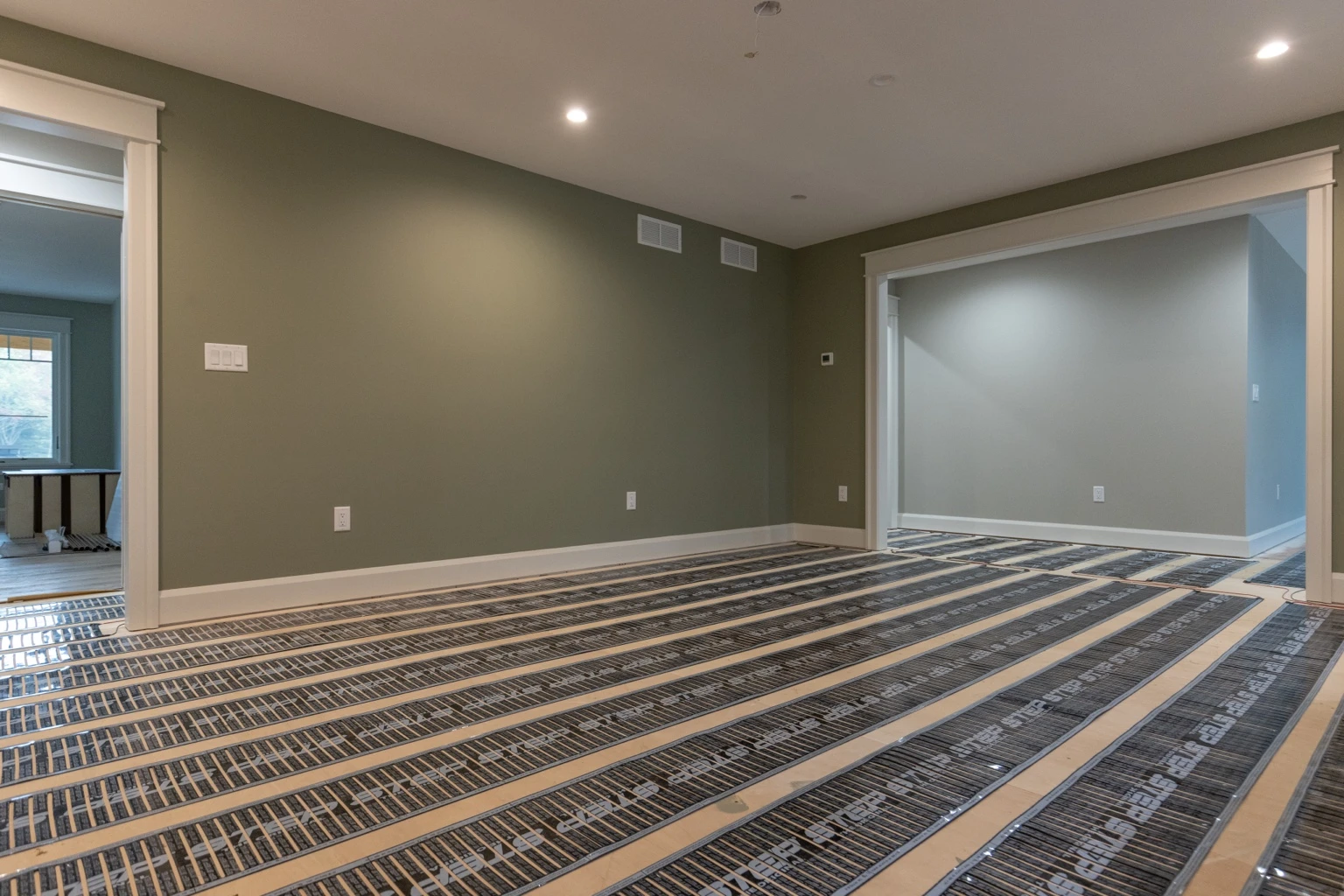
STEP® stands for Self-regulating Technology of Electro Plastics. Its heating elements are made from a polymer containing carbon nanoparticles distributed throughout the material.
They work through a positive temperature coefficient, or PTC: as the material’s temperature rises, its electrical resistance also increases. Current then decreases, reducing heating output.
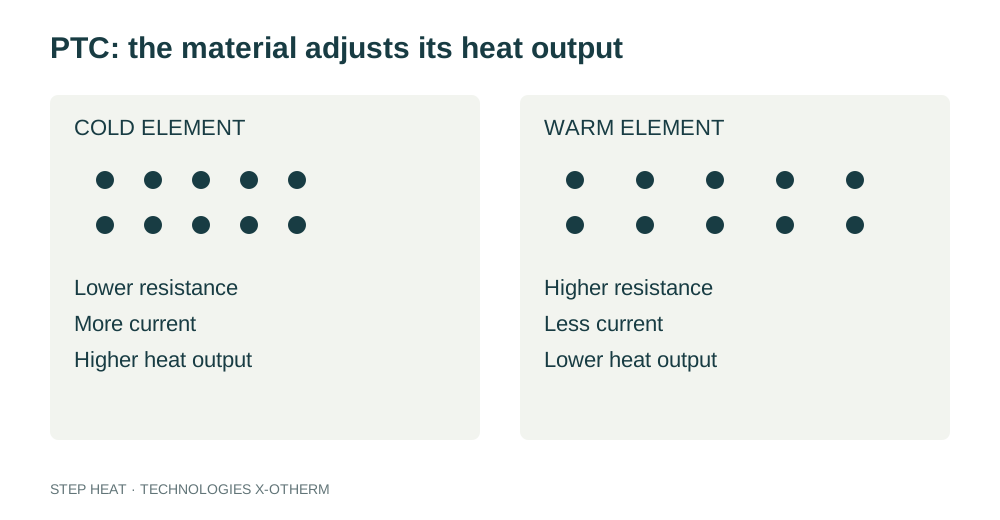
Conductive paths between particles allow more current to flow. The element produces heat.
Polymer expansion reduces conductive paths between particles. Current flow gradually decreases.
The element reduces its heat output as it warms and increases it as it cools. The thermostat still controls the comfort setting.
STEP elements can operate on alternating current (AC) or direct current (DC), depending on the model and configuration. In a conventional installation, a transformer supplies the appropriate voltage to the heating elements.
An alternative energy source may also be considered, without an inverter in some compatible DC configurations. Voltage, available power and controls must be validated for each project.
The material adjusts output according to its own temperature. The thermostat controls the desired temperature and accounts for factors such as solar gains and other heat sources.
The PTC effect helps limit hot spots. Assembly design, electrical protection and compliance with the manufacturer’s instructions remain essential.
The flat elements spread heat over a broad area. STEP’s technical document states that an installation can cover more than 60% of the surface, depending on the layout. This distribution promotes an even surface temperature.
Approximately 1.2 mm thick for the product shown, the film fits into various assemblies in new construction or renovation.
Elements are supplied in rolls of different widths. On-site cutting and connection must follow the product-specific limits and instructions.
Insulation, heat loss, coverage and flooring together determine comfort and energy requirements.
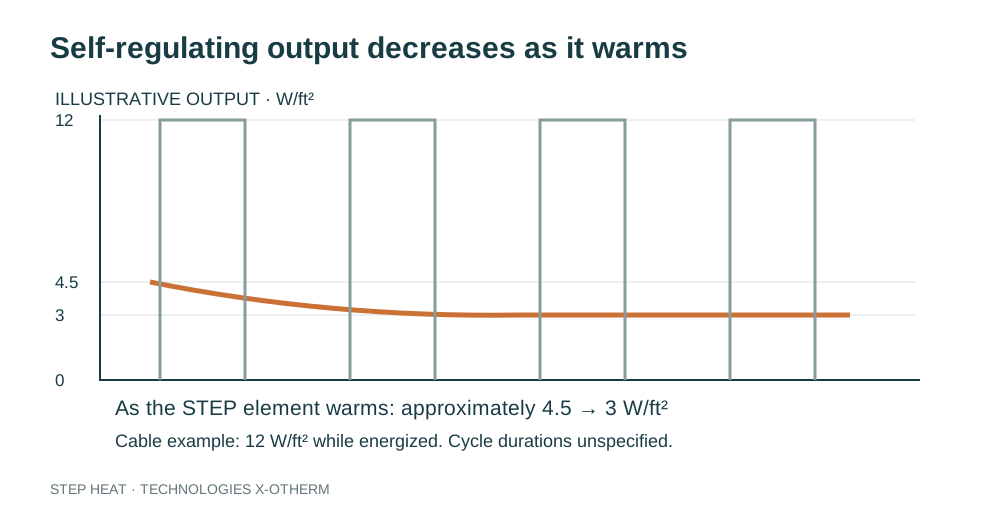
As the element warms, its electrical output decreases. The manufacturer’s document illustrates this with an initial output of 4.5 W/ft², potentially dropping to about 3 W/ft² under the described conditions. These values illustrate operation and are neither a sizing specification nor a consumption guarantee for your building.
For the same electrical energy consumed, resistance heating systems produce comparable amounts of heat. Actual consumption mainly depends on building demand, insulation, controls and operating conditions.
Primary heating where heat-loss calculations allow, supplemental heating or simply warming the floor. Various assemblies can accommodate wood, laminate, carpet, stone or tile, subject to compatibility and temperature limits.
Explore radiant floors ↗Systems designed for outdoor use can melt snow, provide deicing and help prevent ice buildup in targeted areas. The product and its output must be selected for the intended exposure and application.
Explore roof deicing ↗Text adapted from “Heating with Nanotechnology” by Electro Plastics, Inc. Specifications depend on the STEP model and selected assembly.
Send us your plans, target area and flooring type to define a suitable solution.